


Most Nigerian business owners know they need a website. But between the confusing tech jargon, the fear of being overcharged, and simply not knowing where to start — many keep putting it off. If you have been searching for a clear, no-fluff guide on how to build a small business website in Nigeria, you are in the right place. Whether you decide to do it yourself or hand it off to a professional, you will finish this article knowing exactly what is involved, what it costs, and what to watch out for. Let’s get into it.
Why Your Small Business Business Needs a Website in 2026 (Not Just Instagram)
Before we talk about how to build one, let us talk about why it matters — because too many Nigerian business owners are leaving serious money on the table by relying only on social media.
Here is the hard truth: your Instagram page, your Facebook profile, your TikTok account — none of that belongs to you. Any platform can change its algorithm, restrict your reach, suspend your account, or shut down entirely. And when that happens, your audience disappears with it.
A website, on the other hand, is your own property on the internet. Nobody can take it from you.
Beyond ownership, here is what a professional business website does for you in the Nigerian market:
- Customers Google you before they trust you. When someone hears about your business, the first thing they do is search for it online. If they find nothing, they move on to your competitor who has a website.
- A website works while you sleep. Your website is available 24 hours a day, 7 days a week — answering questions, showcasing your services, and collecting leads even when you are at a naming ceremony in Ajah.
- It signals legitimacy. Banks, investors, corporate clients, and government contracts routinely ask for a website. It is one of the fastest ways to communicate that your business is serious.
- It separates you from the crowd. The majority of small businesses in Nigeria still rely only on social media. Having a professional website immediately puts you ahead.
The question is no longer whether you need a website. The question is whether you are going to build it yourself or have it built properly by someone who does this every day.
What Type of Website Does Your Business Actually Need?
This is where most guides skip ahead too quickly. Before you spend a single naira, you need to know what kind of website fits your business.
Business / Brochure Website
This is the most common type for Nigerian small businesses. It showcases who you are, what you do, your services, and how to contact you. Think of it as a digital business card — but far more powerful.
E-Commerce Website
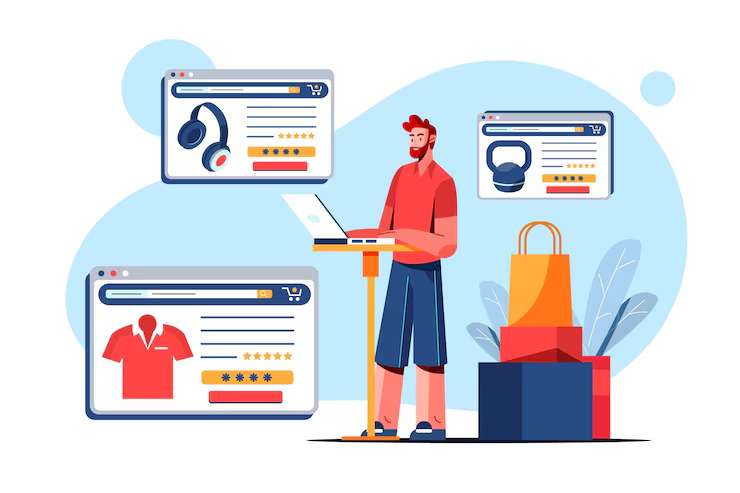
If you sell physical or digital products and want customers to pay online, you need an e-commerce website. Platforms like Shopify and WooCommerce make this possible without coding.
Portfolio Website
For photographers, graphic designers, architects, makeup artists, and other creatives. It lets your work do the talking.
Booking / Appointment Website
For salons, clinics, consultants, event planners, and service providers who want clients to book sessions directly online without back-and-forth messaging.
For the majority of Nigerian small businesses — a clean, fast, professional business website is all you need to start generating leads and building credibility online. If you are not sure which type fits your business, reach out to us at 2WV Digital and we will tell you for free.
What You Need Before You Start Building
One of the biggest reasons DIY websites stall halfway is that people start without the right materials. Before you touch a single tool, gather these:
- ✅ Your business name and logo (or your preferred colour and font style)
- ✅ A clear, one-paragraph description of what your business does and who it serves
- ✅ Your contact information — phone number, email address, WhatsApp number, and physical address if applicable
- ✅ At least 5 good-quality photos of your product, team, workspace, or service in action
- ✅ A list of your core services and what each one delivers for the client
- ✅ A domain name idea — ideally your business name
If you are looking at this list and realising you are missing several of these things, that is completely normal. But it is also a sign of how much work goes into doing this properly. Professional web designers do not just build pages — they help you organise and present your business in the most compelling way possible. That is a big part of what we do at 2WV Digital.
Step 1: Choose and Register Your Domain Name
Your domain name is your website address — for example, yourbusinessname.com or yourbusinessname.com.ng. It is the first thing people see, so it matters.
Tips for choosing a good domain name:
- Keep it short and easy to spell
- Use your business name if available
- Avoid hyphens and numbers — they confuse people
- Choose
.comfor a global feel or.com.ngto signal a Nigerian business and build local trust
Where to register your domain in Nigeria:
- Whogohost — one of Nigeria’s most popular and reliable domain registrars
- QServers — another solid Nigerian option
- Namecheap — international but widely used by Nigerians
Typical cost: ₦5,000 – ₦15,000 per year for a .com.ng domain. A .com domain on Namecheap can cost as low as $10–$15 per year (roughly ₦15,000–₦25,000 at current rates).
Register your domain as soon as you settle on a name. Good domain names get taken quickly.
Step 2: Choose a Reliable Web Hosting Plan
If your domain name is your website’s address, hosting is the land it is built on. Every website needs a server — a computer that stays on 24/7 and delivers your website to anyone who visits.
What to look for in a hosting provider:
- Uptime reliability (you want 99.9% uptime — your site should almost never go down)
- Speed (slow hosting = slow website = customers leaving)
- Customer support (especially important if you encounter technical issues)
- Nigerian payment options
Recommended hosting providers:
- Whogohost — local support, accepts naira payment, good uptime
- QServers — solid Nigerian option with local data centres
- SiteGround — international, excellent speed and support
- Namecheap — affordable and beginner-friendly
Typical hosting cost in Nigeria: ₦20,000 – ₦60,000 per year depending on the plan.
One important warning: Do not let price be your only deciding factor. Cheap hosting causes slow websites. A slow website frustrates visitors and hurts your Google ranking. Spend a little more and get it right.
Step 3: Choose Your Website Platform
This is the step that confuses most people. Your website platform — also called a Content Management System (CMS) — is the software you use to actually build and manage your website.
Here are your main options:
WordPress.org — Recommended for most Nigerian businesses
WordPress powers over 43% of all websites on the internet. It is free, flexible, and is the platform most Nigerian web designers and developers work with. It grows with your business, supports SEO, and gives you complete control over your site. For a small business that is serious about long-term growth, WordPress is the smart choice.
Wix / Squarespace
These are drag-and-drop builders that are easier to use for complete beginners. The downside is limited flexibility, higher long-term costs, and difficulty migrating to another platform later. Fine for a quick start, not ideal for growth.
Shopify
If selling products online is your primary goal, Shopify is built for exactly that. It handles payments, inventory, shipping, and more out of the box.
For the purposes of this guide, we will focus on WordPress — because it is what we recommend and use for clients at 2WV Digital, and it gives your business the best foundation for growth.
Step 4: Install a Theme and Set Up Your Design
Once WordPress is installed on your hosting account, the next step is choosing how your website looks. This is done through a theme — a pre-built design template that controls the visual appearance of your site.
Recommended free WordPress themes:
- Astra — lightweight, fast, highly customisable
- GeneratePress — clean and extremely fast
- Kadence — beginner-friendly with solid design options
What to look for in a theme:
- Fast loading speed
- Mobile responsive (looks good on phones — the majority of your Nigerian visitors will come from mobile)
- Compatible with popular page builders like Elementor or the Gutenberg editor
- Actively maintained and updated
What to avoid:
Flashy themes with lots of animations, pre-loaded sliders, and heavy graphics may look impressive in the demo, but they slow your website down significantly. Speed is more important than visual flair.
Here is the honest reality: this is where most DIY websites fall flat. Choosing the wrong theme, not knowing how to customise it, or ending up with a site that looks nothing like what you envisioned is one of the most common frustrations business owners face. If you want a website that looks professional from day one and actually represents your brand well, this is exactly what we handle at 2WV Digital.
Step 5: Build Your Core Pages
Your website does not need to be massive. In fact, a focused website with five well-written pages is far more effective than a bloated one with ten mediocre ones.
Here are the essential pages every Nigerian small business website needs:
Home Page
This is your first impression. Within the first five seconds of landing on your homepage, a visitor should know exactly who you are, what you do, and who you serve. Include a clear headline, a strong call to action (like “Get a Free Quote” or “Book a Consultation”), and a brief overview of your services.
About Page
People do business with people they trust. Your About page tells your story — how your business started, what you stand for, and why customers should choose you over the next person. Do not make it generic. Be specific and human.
Services Page
Detail each service you offer and what it delivers for the client. Focus on outcomes, not just features. Instead of saying “We offer social media management,” say “We manage your social media so your brand stays visible and your followers become paying customers.”
Contact Page
Make it easy for people to reach you. Include your phone number, email address, WhatsApp link, and a simple contact form. If you have a physical location, add your address and a Google Maps embed.
Blog (Optional but Highly Recommended)
A blog is one of the most powerful long-term tools for getting found on Google. Consistently publishing useful content around topics your customers search for will bring organic traffic to your website month after month — without spending on ads. This very article is an example of that strategy in action.
Step 6: Optimise Your Website for SEO and Speed
You can have a beautiful website and still get zero visitors if Google cannot find it. SEO — Search Engine Optimisation — is how you make sure your website shows up when potential customers search for what you offer.
Here is what to do at a basic level:
Install an SEO plugin
Yoast SEO and RankMath are the two most popular WordPress SEO plugins. Both are free and guide you through optimising each page.
Use your keywords naturally
Include the terms your customers actually search for in your page titles, headings, and first paragraph. For example, if you offer catering services in Abuja, phrases like “catering services in Abuja” and “event catering Abuja” should appear naturally in your content.
Compress your images
Large image files are one of the biggest causes of slow websites in Nigeria. Before uploading any image, run it through TinyPNG — a free online tool that reduces file size without losing quality.
Make sure your website is mobile-friendly
Over 70% of internet users in Nigeria browse from their mobile phones. If your website does not look and work properly on a small screen, you are losing a massive portion of your potential customers.
Set up Google Search Console
Google Search Console is a free tool from Google that shows you how your website is performing in search results. Submit your sitemap here to help Google index your pages faster.
Create a Google Business Profile
This is separate from your website but works hand in hand with it. A Google Business Profile puts your business on Google Maps and in local search results. When someone in Lagos searches “website designer near me” or “digital marketing agency Lagos,” a verified Google Business Profile dramatically improves your chances of appearing.
Step 7: Launch, Test, and Promote Your Website
Before you go live, take a few hours to test everything properly. Fixing problems before launch is far easier than fixing them after your customers have already encountered them.
Pre-launch checklist:
- ✅ Open your website on your phone and check that it looks right
- ✅ Click every button, menu link, and form to make sure they all work
- ✅ Fill out your contact form yourself and confirm you receive the message
- ✅ Check your website loading speed using Google PageSpeed Insights
- ✅ Read through all your content for typos and missing information
- ✅ Make sure your SSL certificate is active (your URL should show
https://— most hosts include this free)
Once you go live, promote it:
- Announce it on WhatsApp — your broadcast list, groups, and status
- Post on Instagram and Facebook with a link in your bio
- Update your LinkedIn profile with your website URL
- Add it to your email signature immediately
- Print it on your business cards and any physical materials
Your website launch is not the end — it is the beginning. The businesses that get the most out of their websites are the ones that treat it as a living, growing asset. Update it regularly, keep publishing content, and review your Google Search Console data every month to understand how people are finding you.
What is the Cost to Build a Small Business Website in Nigeria?
This is the question everyone wants answered. Here is an honest breakdown:
| Website Type | DIY Cost (Yearly) | Done-for-You (One-Time) |
|---|---|---|
| Business / Brochure Website | ₦30,000 – ₦60,000 | ₦80,000 – ₦250,000 |
| E-Commerce Website | ₦60,000 – ₦120,000 | ₦200,000 – ₦500,000+ |
| Portfolio Website | ₦25,000 – ₦50,000 | ₦70,000 – ₦180,000 |
Note: DIY costs cover domain and hosting only. They do not include the value of your time spent learning, building, troubleshooting, and maintaining the site — which for most business owners is worth far more than the professional fee.
A professionally built website is not just about the design. It is about strategy — making sure the right people find your site, stay on it long enough to trust you, and take action. That is the difference between a website that sits there looking pretty and one that actively generates leads and revenue for your business.
Recommended for you: Website Design cost in Nigeria
At 2WV Digital, we build websites that work — not just websites that exist. Get a free quote here and let us show you what is possible for your business.
Frequently Asked Questions About How to build a Small Business Website in Nigeria
How much does it cost to build a website in Nigeria?
A basic business website built by a professional typically costs between ₦80,000 and ₦250,000 as a one-time fee. DIY costs can be lower — around ₦30,000–₦60,000 per year for domain and hosting — but do not account for your time or the quality gap that usually comes with an untrained build.
Can I build a website myself without any coding knowledge?
Yes, it is possible. Tools like WordPress with Elementor allow you to build a website visually without touching code. However, doing it well — with proper speed, SEO, mobile optimisation, and conversion-focused design — takes time and experience that most business owners simply do not have.
How long does it take to build a website in Nigeria?
A professionally built small business website typically takes 1–3 weeks from briefing to launch. DIY timelines vary widely — some people finish in a week; many spend months without completing theirs.
Is WordPress good for Nigerian businesses?
Absolutely. WordPress is the most widely used website platform in the world and is very well supported by Nigerian web designers and developers. It is flexible, SEO-friendly, and grows with your business.
What is the best web hosting company in Nigeria?
Whogohost and QServers are the most popular Nigerian hosting providers, offering naira payment options and local support. For faster international hosting, SiteGround and Namecheap are excellent choices that many Nigerian businesses use.
Do I need a website if I already have Instagram?
Yes. Your Instagram page is rented space — Meta owns it and controls who sees your content. A website is your own property where you control the experience, collect leads, rank on Google, and build long-term credibility that no algorithm can take away.
Conclusion
Now you know exactly what goes into building a professional business website — from choosing your domain name to launching and promoting your site. Understanding how to build a small business website in Nigeria is the first step, but knowing how to do something and having the time, skill, and patience to execute it properly are two very different things.
If you are a business owner whose time is better spent running and growing your business — not learning web design, debugging themes, or figuring out why your contact form is not sending emails — then having it done professionally is simply the smarter investment.
That is exactly what we do at 2WV Digital. We build clean, fast, professional websites for Nigerian small businesses — handling everything from domain registration to design, SEO setup, and launch, so you can focus on what you do best. We have helped Nigerian businesses across multiple industries build an online presence that attracts real clients and drives real revenue.
If you are serious about growing your business online in 2026, let us talk. Get your free website quote here — no pressure, no jargon, just a clear conversation about what your business needs and what it will cost.
Written by the 2WV Digital Team — a CAC-registered digital marketing agency helping Nigerian businesses grow online.
That was amazing